Every first-time buyer I work with has the same question when I tell them they need to bring a deposit check: "Wait, I have to give someone money before I even own the house? What if the deal falls through?"
That is a completely fair question. Let me walk you through how earnest money works in Florida, how much you can expect to put down, and how to make sure you get it back if the deal does not go through.
A Real Story from Ryan
I had a buyer in Delray Beach who found a beautiful townhome listed at $375,000. We wrote an offer with $7,500 in earnest money, about 2%. The seller accepted. Three weeks into the process, the inspection revealed major foundation issues. The repair estimate was $18,000. My buyer decided to back out, and because we had an inspection contingency in the contract, the full $7,500 was returned to her within 10 days. She was nervous about it the whole time, but that is exactly what the contingency is for.
On the flip side, I have seen a buyer in Boca Raton who waived all contingencies to make a competitive offer. The appraisal came in $25,000 below the contract price, and he could not come up with the difference. The seller refused to lower the price, and because the buyer had waived the appraisal contingency, the seller kept the $10,000 earnest money deposit. That was a painful lesson in knowing what you are giving up when you waive protections.
What Is Earnest Money?
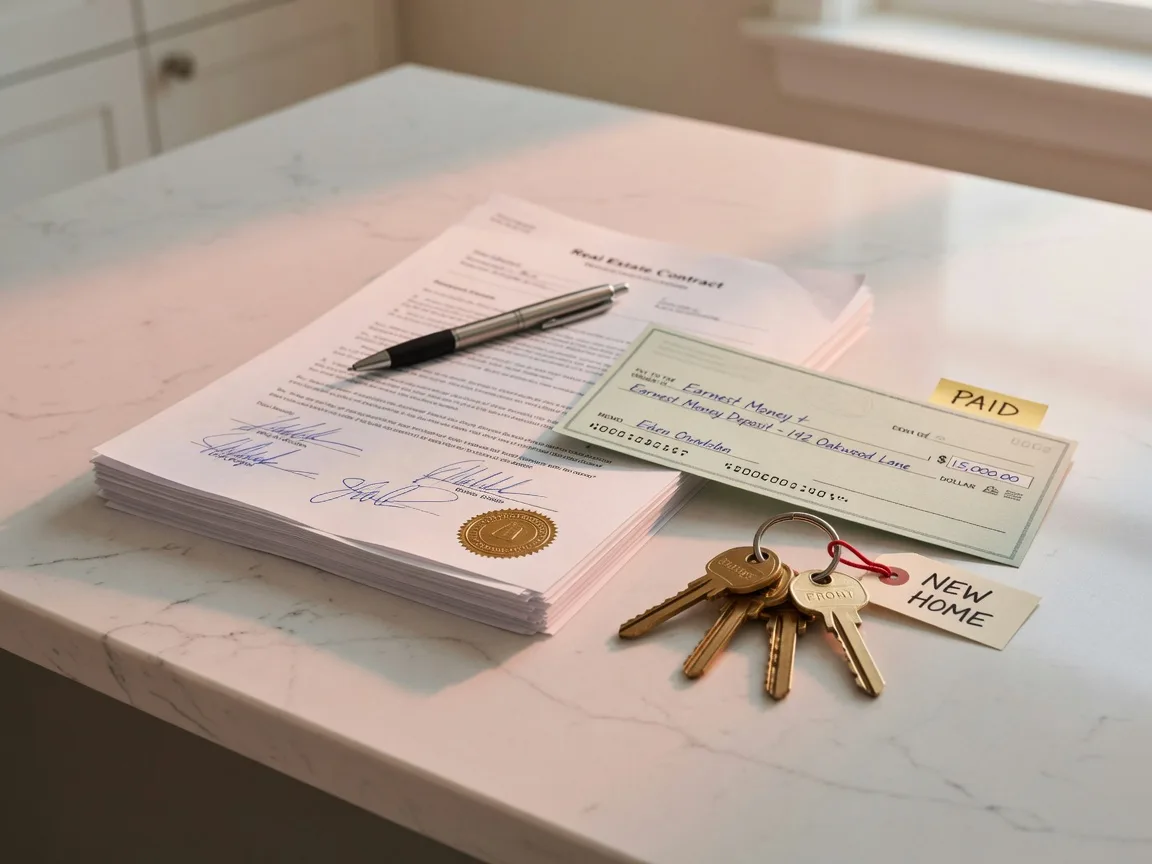
Earnest money is a deposit you make when your offer is accepted to show the seller you are serious. Think of it as a good-faith payment. It tells the seller: "I am committed to this transaction, and I am putting my own money behind that commitment."
The deposit is held in a third-party escrow account, usually with a title company or the listing broker's trust account. The seller never touches it directly. At closing, it is applied to your down payment and closing costs. If you do everything the contract requires, you never write a separate check for it again.
How Much Earnest Money Do You Need in South Florida?
In South Florida, earnest money deposits typically range from 1% to 3% of the purchase price. Here is what that looks like at common price points:
Earnest Money by Price Point
- $250,000 home (condo in Deerfield Beach): $2,500 to $7,500
- $350,000 home (townhome in Boynton Beach): $3,500 to $10,500
- $450,000 home (single-family in Boca Raton area): $4,500 to $13,500
In a competitive situation with multiple offers, offering 2% to 3% earnest money signals that you are financially solid and serious. In a slower market, 1% may be enough. I always advise my buyers based on the specific property, the seller's situation, and how many other offers are expected.
See our full guide on making a competitive offer for more strategies on how earnest money fits into your offer package.
How Your Earnest Money Is Protected
The key to protecting your earnest money is contingencies. These are conditions written into the contract that allow you to back out without losing your deposit. Here are the main ones in Florida:
Inspection Contingency
You have a set period, typically 7 to 15 days, to have the home inspected. If the inspection reveals issues you are not comfortable with, you can back out and get your full earnest money back. This is the most common way buyers protect themselves.
I recently had a buyer under contract on a $320,000 home in Margate. The inspection found an aging roof that the seller would not replace. My buyer exercised the inspection contingency and walked away. The full earnest money deposit was returned within a week. That is the system working exactly as it should.
Financing Contingency
If your loan falls through despite your best efforts, the financing contingency protects your deposit. You need to provide the lender rejection letter to the seller, and the deposit is returned. This is why getting pre-approved before you shop is so important.
Read our guide on choosing a lender to make sure you work with someone who can actually close your loan.
Appraisal Contingency
If the home appraises for less than the contract price and the seller will not lower the price, the appraisal contingency lets you back out. This is becoming more important in 2026 as home prices stabilize and appraisals sometimes come in below asking.
When Can You Lose Your Earnest Money?
The honest answer: yes, it can happen. Here are the scenarios where you risk losing your deposit:
- You simply change your mind after all contingencies expire. This is the most common way earnest money is lost.
- You fail to close by the agreed date through no fault of the seller. Your lender is delayed, you cannot get your documents in on time, or you have a last-minute financial issue.
- You waive contingencies and then cannot perform. This is why I rarely recommend waiving contingencies for first-time buyers, even in competitive markets.
The good news: with an experienced agent structuring your contract properly, the risk of losing earnest money is very low. In my experience, earnest money disputes happen in less than 5% of transactions, and most of those are resolved through mediation before anyone loses their deposit.
How to Pay Earnest Money in Florida
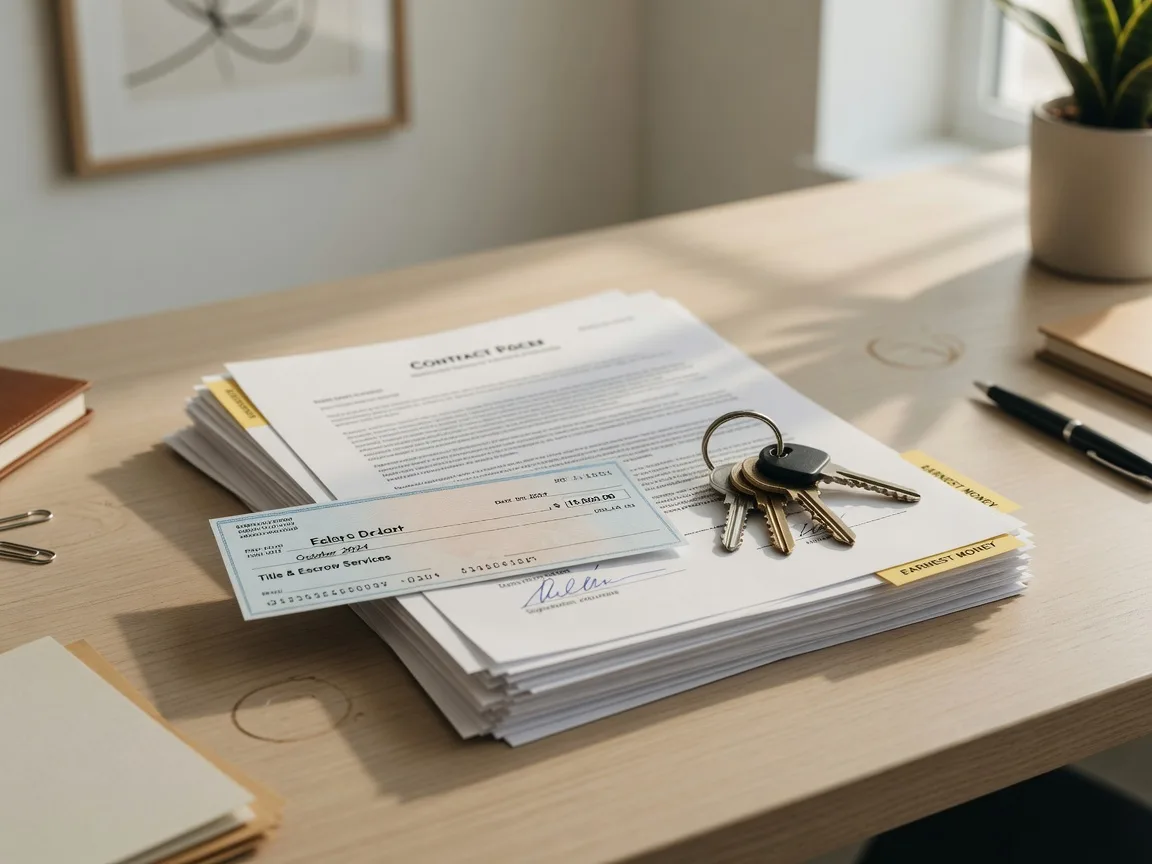
In Florida, earnest money is typically paid by bank check or wire transfer within 1 to 3 days of the seller accepting your offer. It is held by a licensed title company or the listing broker's escrow account. You will receive a receipt from the escrow holder.
Important: never give the earnest money directly to the seller. That is a red flag. Always make sure it goes to a licensed third-party escrow holder.
What Happens to Earnest Money at Closing
At closing, your earnest money deposit is applied to your purchase costs. It becomes part of your down payment or goes toward your closing costs. You do not get a separate check for it. The Closing Disclosure will show the earnest money as a credit on your side of the transaction.
So if you put down $7,500 in earnest money on a $350,000 home with a $12,250 FHA down payment, you only need to bring $4,750 more to the closing table. The earnest money already counts toward what you owe.
See how much cash you need to close on a Florida home for a complete breakdown of every cost.
Can a Seller Refuse to Return Earnest Money?
If you back out for a valid reason covered by a contingency, the seller must release the earnest money. If the seller refuses, the escrow holder will hold the funds until both parties agree on a release or a court decides. In practice, most disputes are resolved without going to court. Florida real estate contracts have a mediation clause that requires both parties to try mediation before litigation.
I have been through two earnest money disputes in my career, and both were resolved through mediation within 30 days. The buyers got their deposits back in both cases because the contracts were written correctly from the start.
Earnest Money Checklist for First-Time Buyers
- Budget 1% to 3% of the purchase price for your deposit
- Make sure the funds go to a licensed third-party escrow holder
- Never give earnest money directly to the seller
- Protect your deposit with inspection, financing, and appraisal contingencies
- Keep your finances stable during the entire closing process
- Confirm at closing that your deposit is credited on the Closing Disclosure
The Bottom Line
Earnest money sounds scary when you first hear about it, but it is a standard, well-protected part of the home buying process. With the right contingencies and a good agent, your deposit is safe. And at the end of the day, it is money you were going to spend on your down payment anyway, just a little earlier than expected.
If you are nervous about the process, that is exactly why I am here. I walk every buyer through the contract page by page before they sign anything. No surprises, no jargon, just honest explanations of what every line means.
For more buyer education, visit RyanParkerHomeGuide.com for a comprehensive library of real estate guides. For seller resources, check out SouthFloridaSellerGuide.com.